Before you spend another dollar on local SEO, make sure you know what is already working, what is not working and where leads are falling off. Too many small businesses pay for more content, more backlinks or more ads without tracking the basics first. That usually leads to a bigger bill, not more phone calls.
Local SEO should help people in your service area find you, trust you and contact you. If you cannot measure those three things, you are guessing. A contractor, driving school, cleaning company or nonprofit does not need a pretty report full of vanity metrics. You need to know whether your website and Google presence are creating real opportunities.
This guide breaks down the numbers to track before increasing your local SEO budget, so you can make smarter decisions and avoid paying for activity that does not move the business.
Why tracking comes before spending more on local SEO
More local SEO is not always the answer. Sometimes your Google Business Profile is getting views but not calls. Sometimes your website ranks, but the page does not make it clear what you do or where you serve. Sometimes people call, but they are the wrong type of lead.
Those are different problems. Each one needs a different fix.
If you do not track the right data, you may hire an SEO agency to chase rankings when the real issue is poor conversion. You may redesign a page when the real issue is that your Google profile has weak reviews. You may write more blog posts when your main service pages are not clear enough.
Good tracking keeps your decisions grounded. It shows whether you need better visibility, stronger website optimization, a cleaner Google Business Profile, better calls to action or a full website redesign.
Track your baseline before changing anything
Before you make major updates, record your current numbers. This gives you a baseline, which is the starting point you compare against later.
A baseline does not need to be complicated. Start with the last 30 to 90 days of performance. If your business is seasonal, use 90 days or compare against the same period last year when possible.
At minimum, collect data from:
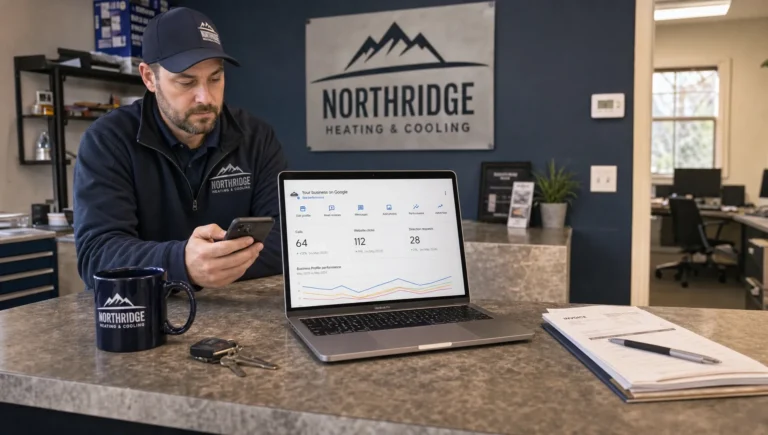
- Google Business Profile Performance
- Google Search Console
- Google Analytics 4
- Your phone call records or call tracking software
- Your contact forms or booking system
- A simple spreadsheet showing lead source and lead quality
Google Search Console is especially useful because it shows the search terms people used before clicking your site. Google explains that its performance reports include impressions, clicks, click-through rate and average position. Those numbers help you see whether your website is visible and whether searchers are interested enough to click.
What to track before you spend more on local SEO
You do not need to track everything. You need to track the metrics that explain how people find you and what they do next.
1. Google Business Profile actions
Your Google Business Profile is often the first thing a local customer sees. For many service businesses, it matters more than the homepage because people can call, get directions, read reviews or visit your website directly from the profile.
Track these actions every month:
- Calls from your profile
- Website clicks
- Direction requests if customers visit your location
- Messages if you use Google messaging
- Booking actions if available for your category
If profile views are high but calls are low, you may have a trust or clarity problem. Your photos may be weak, your reviews may not be strong enough or your services may not be described clearly.
If calls are increasing but poor quality, your service descriptions may be attracting the wrong people. For example, a driving school may get calls from students outside its service area if the profile and website do not clearly define locations served.
2. Search impressions and clicks
Impressions show how often your website appeared in Google Search. Clicks show how often people actually visited your website from those search results.
This is where many business owners get misled. Impressions going up can look good, but impressions alone do not pay bills. If people see your page but do not click, the issue may be your page title, meta description or relevance to the search.
Look for pages with high impressions and low click-through rate. Those pages may need clearer titles, stronger local wording or a better match between the search term and the page content.
This is also where web design and SEO overlap. A page can be technically visible but still fail because the message is vague. Strong local SEO gets attention, but the page still has to earn the click.
3. Rankings for the searches that actually matter
Rankings matter, but only when you track the right searches. Ranking for a broad term like “best contractor” is less useful than appearing for a service plus location search such as “bathroom remodeling Brooklyn” or “driving school near me.”
Track keywords based on buyer intent, not ego. A local service business should focus on searches that suggest someone needs help soon.
Examples include:
- Service plus city
- Service plus neighborhood
- Service plus “near me”
- Emergency or same-day searches if relevant
- License, pricing or appointment-related searches
Do not check rankings from your own phone once and make decisions from that. Local results change based on location, device, search history and map proximity. Use a consistent tracking method, and compare trends instead of obsessing over one position.
For a deeper look at what affects visibility, Sleek Web Designs has a guide to local search ranking signals that explains the factors Google may use when comparing nearby businesses.
4. Website conversion actions
Your website should not just look professional. It should move visitors toward action. That means calls, form submissions, bookings or quote requests.
Track these conversion actions:
- Phone number clicks on mobile
- Contact form submissions
- Booking requests
- Quote requests
- Clicks on “Get Directions” or location pages
- Clicks from service pages to contact pages
This is where a custom website can outperform a generic template. The goal is not to win design awards. The goal is to make the next step obvious and easy.
If your website gets traffic but no leads, review the basics first. Is the phone number easy to find? Is the site mobile responsive? Does each service page explain who the service is for, where it is offered and what to do next? Does the page load quickly enough on a phone?
A weak website can waste good local SEO traffic. Before spending more to attract visitors, make sure those visitors have a clear path to becoming customers.
5. Lead source and lead quality
Tracking lead volume is useful, but tracking lead quality is better. Ten leads from people who cannot afford your service are not the same as three leads from customers ready to book.
Create a simple lead log. It can be a spreadsheet. You do not need a complicated system at the start.
Include these fields:
- Date of inquiry
- Lead source
- Service requested
- Location
- Good fit or poor fit
- Booked or not booked
- Estimated job value
- Notes from the call
This tells you which channels create real opportunities. You may discover that Google Business Profile calls close better than form leads, or that one service page brings in higher-value jobs than the rest of the website.
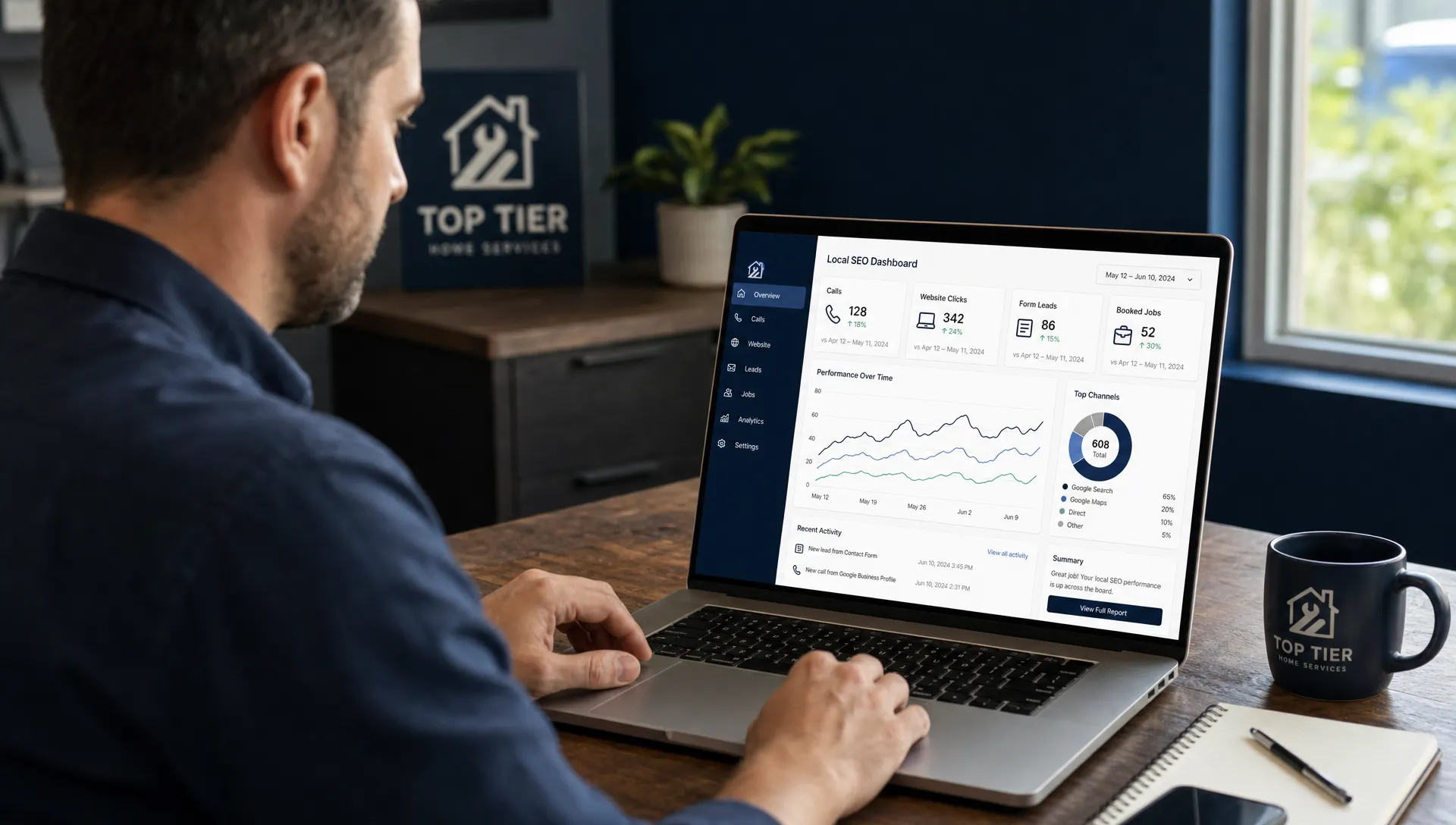
The local SEO tracking table business owners actually need
The table below keeps the focus on business outcomes. It avoids extra noise and points each metric to a decision.
| What to track | Where to find it | What it tells you | What to do with it |
|---|---|---|---|
| Google Business Profile calls | GBP Performance | Whether local searchers are contacting you directly | Improve reviews, services, photos and profile clarity |
| Website clicks from GBP | GBP Performance | Whether people want more information before calling | Improve landing pages and calls to action |
| Search impressions | Google Search Console | Whether your site is appearing for searches | Improve page relevance and local content |
| Search clicks | Google Search Console | Whether searchers choose your result | Rewrite titles and descriptions if clicks are low |
| Mobile phone clicks | GA4 or call tracking | Whether visitors can contact you easily | Make phone numbers more visible on mobile |
| Form submissions | GA4 or form records | Whether website visitors are converting | Simplify forms and strengthen page messaging |
| Lead quality | Spreadsheet or CRM | Whether SEO is attracting the right customers | Refine services, locations and page copy |
| Booked jobs | CRM, calendar or manual tracking | Whether leads become revenue | Invest more in the sources that close |
This table is simple on purpose. If you cannot connect a metric to a business decision, it probably should not control your budget.
Review your service pages before buying more traffic
For most local businesses, service pages are where the money is. A plumber, HVAC company, cleaning service, contractor or driving school needs clear pages for the services people search for.
A strong service page should answer basic questions quickly:
- What service do you provide?
- Who is it for?
- What areas do you serve?
- Why should someone trust you?
- What should the visitor do next?
If your service pages are thin, vague or missing local details, spending more on local SEO may only amplify the problem. Google needs page clarity, and customers do too.
This is also a common issue with older WordPress websites. The site may have been built years ago, but the pages no longer match the services, locations or customer questions that matter today. In that case, a focused website redesign may create more return than another round of random blog posts.
If you suspect your site is getting traffic but not converting, a structured review like a local SEO audit for conversions can help identify whether the problem is visibility, trust or website performance.
Track calls, not just form fills
Many small business websites undercount leads because they only track forms. For local service providers, phone calls are often the main conversion.
If a customer has a leak, needs a driving lesson, wants a cleaner or is comparing contractors, they may call instead of filling out a form. If you are not tracking those calls, you are missing a big part of the picture.
At a basic level, review your phone records and ask new callers how they found you. A better setup uses call tracking, but keep it clean. Your main business number should remain consistent across important listings, especially Google Business Profile, unless your setup is handled carefully.
Track call volume, but also track what happened after the call. Did they book? Were they in your service area? Were they looking for a service you actually provide? Those details matter more than the raw call count.
Watch for signs your website is blocking leads
Sometimes local SEO is doing its job, but the website is not. This happens often with sites that look fine on a desktop but are hard to use on a phone.
Check these issues before increasing your budget:
- The phone number is hard to tap on mobile
- The contact form has too many fields
- The homepage does not clearly say what the business does
- Service areas are buried or missing
- Pages load slowly
- Calls to action are vague
- Reviews or proof points are hard to find
- The website looks outdated compared with local competitors
A mobile responsive website is not optional for local businesses. People searching nearby are often on their phones, and they will not fight through a confusing page to contact you.
This does not mean every business needs a massive rebuild. Sometimes the right move is to fix page structure, speed, service copy and calls to action. Other times, an old site needs a practical rebuild focused on leads, not decoration.
Use AI to spot patterns, not replace judgment
AI can help with local SEO tracking, but it should not turn your marketing into guesswork with fancier words.
A practical use of AI is to summarize patterns in your data. For example, you can export Search Console queries and ask AI to group them by service type, location and intent. You can review call notes and identify common objections. You can compare service pages and find missing questions customers keep asking.
That is useful because it saves time. It does not replace business judgment.
If AI tells you to create ten new pages but your call log shows that most leads are coming from one high-value service, your priority may be to strengthen that service page first. The best use of AI is to make your data easier to understand, not to create more marketing tasks.
How long should you track before spending more?
Track for at least 30 days before making a budget decision. If possible, use 60 to 90 days. Local SEO can move slowly, and short windows can be misleading.
That said, do not use tracking as an excuse to delay obvious fixes. If your Google Business Profile has the wrong hours, your phone number is missing from your website or your main service page does not mention your location, fix that now.
A good rhythm is simple. Review numbers weekly, make decisions monthly and evaluate bigger strategy changes quarterly.
Weekly tracking keeps you aware. Monthly review helps you see movement. Quarterly review gives enough time to judge whether the work is producing better visibility and leads.
What not to track too closely
Some numbers look impressive but do not tell you much about revenue.
Be careful with:
- Total website traffic without separating local traffic
- Rankings for broad keywords that do not bring buyers
- Social media likes that do not lead to calls
- Impressions without clicks
- Clicks without lead tracking
- Automated SEO scores that ignore business results
These metrics can provide context, but they should not drive your spending decisions. A small local business does not need more noise. It needs a clear line between marketing work and customer growth.
If you are trying to clean up weak performance, it may also help to review common local SEO mistakes that hurt rankings before assuming the answer is a larger budget.
When it makes sense to spend more on local SEO
Spending more can make sense when the basics are already in place and the data shows a clear opportunity.
For example, increasing your investment may be smart if your Google Business Profile calls are growing, your service pages are converting and you have identified nearby areas where you are underrepresented. It may also make sense if Search Console shows strong impressions for profitable services, but your pages need better optimization to win more clicks.
Before increasing spend, make sure you can answer these questions:
- Which services bring the best leads?
- Which locations are producing calls?
- Which pages convert visitors?
- Which keywords lead to real inquiries?
- Which leads turn into booked jobs?
- What is one new customer worth to the business?
If you cannot answer those questions yet, spend time fixing tracking first. Once you have clean numbers, local SEO decisions become much easier.
Frequently Asked Questions
What is the most important local SEO metric to track? For most service businesses, the most important metric is qualified leads from local search. That includes calls, forms and bookings that come from your Google Business Profile or organic search and match the services you actually want to sell.
Should I track rankings or leads first? Track both, but leads should carry more weight. Rankings can explain visibility, but leads show whether that visibility is turning into business. A ranking that does not produce calls is not worth much.
How often should I review local SEO performance? Review basic numbers weekly, such as calls and form submissions. Make budget or strategy decisions monthly. For bigger changes, like a website redesign or new location strategy, review 60 to 90 days of data when possible.
Can AI help with local SEO tracking? Yes, AI can help organize Search Console queries, summarize call notes, identify content gaps and find patterns in customer questions. It works best when paired with real data from your website, Google Business Profile and lead records.
Do I need a new website before investing in local SEO? Not always. If your current website is clear, fast, mobile responsive and converting visitors, you may only need optimization. If it is confusing, outdated or not generating leads, fixing the website may be the smarter first move.
Get clear before you spend more
Local SEO should not feel like a mystery expense. Before you increase your budget, track the numbers that show whether people can find you, trust you and contact you.
Sleek Web Designs helps small businesses improve local visibility, fix website problems and turn more visitors into leads. We focus on practical website optimization, local SEO and AI-assisted analysis without pushing long-term contracts.
If your website is not bringing in enough calls or you are not sure where your leads are coming from, start with a clear review of what is working and what is not. You can learn more about our approach to web design and local SEO for small businesses and decide the next step from real data, not guesswork.