A moving company can get plenty of website traffic and still have gaps in its schedule. The problem is often a mismatch: customers outside your service area, move dates you cannot accommodate or quote requests for services you do not provide. Effective local SEO for moving companies should bring in more of the jobs your crews can actually handle, then make requesting an estimate straightforward.
That takes more than adding city names to a website. Your Google Business Profile, service pages, reviews and quote process need to tell the same clear story: where you move customers, what you handle and why someone should trust you with their belongings.
Start with the moves you want to book
Before changing your website, define a qualified lead. A residential mover specializing in Brooklyn apartments needs a different strategy from a company focused on office relocations or interstate moves.
Choose your priorities based on crew capacity, travel time, equipment and the types of jobs that make financial sense. If you regularly handle walk-up apartments, building access requirements and tight loading windows, those details belong in your marketing. They help customers recognize that you understand their move.
Create a simple definition your team can use: a qualified inquiry has a suitable move date, an origin and destination you serve, a manageable inventory and a service request within your capabilities.
Google’s guidance on local search rankings explains that relevance, distance and prominence influence local visibility. You can improve how clearly your business matches a search, but you cannot remove the effect of distance by listing more neighborhoods.
The goal is not to appear everywhere. It is to become easier to find and easier to choose within a realistic operating area.
Make your Google Business Profile accurate and useful
Your profile may be the first place a customer encounters your company. Treat it as a working source of business information, not a listing you complete once and forget.
Get the business details right
Use your actual business name, without adding promotional phrases or extra location keywords. Choose the most specific available category that accurately describes your moving business. Add secondary categories only when they reflect services you genuinely provide.
Keep your phone number, website and operating hours current. If customers cannot visit your operating address, follow Google’s service-area business rules rather than presenting it as a customer-facing office. Do not create profiles for virtual offices or neighborhoods where you have no eligible location.
Adding service areas describes where you work. It does not guarantee rankings throughout those areas.
Show evidence of your work
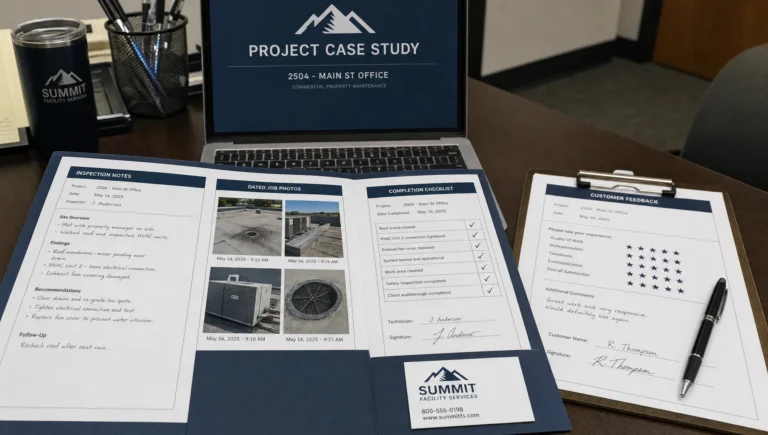
Use original photos of your trucks, equipment and completed moving jobs. With permission, show furniture protection, careful loading and the practical details customers worry about. Avoid exposing customer addresses, license plates or personal belongings unnecessarily.
Describe actual services, such as packing, apartment moves or office relocations. Do not advertise storage, specialty-item handling or interstate moving unless your business can provide those services and meets applicable requirements.
Keep seasonal availability and hours accurate. A customer planning a month-end move needs reliable information, not an outdated promotion.
Build website pages that support local SEO for moving companies
A single page listing every service and neighborhood usually leaves important customer questions unanswered. Build a small number of useful pages around distinct moving needs, then expand when there is a genuine reason.
Separate services when the customer needs differ
An apartment move involves different concerns from an office relocation. Packing services raise questions about materials, fragile items and responsibility for preparation.
| Page type |
Questions it should answer |
Useful next step |
| Apartment moving |
Can you handle stairs, elevators and building access requirements? |
Request an apartment moving estimate |
| Office relocation |
How do you coordinate access, equipment and scheduling? |
Discuss the relocation scope |
| Packing services |
What gets packed, which materials are included and what is excluded? |
Request packing details with a quote |
| Service-area page |
Do you serve this location, and what local moving conditions matter? |
Check whether the route fits your service area |
Only publish pages for services you offer. Explain what is included, what affects the estimate and what information you need before confirming the job.
Give location pages a real purpose
A useful neighborhood page explains something specific about moving there. For a Brooklyn mover, that might include coordinating elevator reservations, discussing loading access or arranging a certificate of insurance when a building requests one.
Do not imply that every building follows the same rules. Explain how your team checks requirements with the customer or property manager.
Avoid copying one page and swapping the neighborhood name. If you cannot offer meaningful local detail or evidence of service, improve a broader service-area page instead. Unique job photos and customer-approved examples are more convincing than repeated claims about being the best mover.
Turn mobile visits into usable quote requests
The website has one immediate job: help a potential customer take the next sensible step. Attractive layouts matter less than a clear service area, a working phone button and an estimate form that is easy to complete.
On a phone, visitors should quickly understand what you move, where you operate and how to contact you. Keep the primary call to action consistent, such as “Request a moving estimate.” Do not promise an instant confirmed price if the job requires a survey or follow-up conversation.
For local SEO for moving companies to produce better leads, the form needs enough information to establish fit without becoming a full inventory exercise.
Start with these fields:
- Move date or date range: Include flexibility if the customer has it.
- Origin and destination: ZIP codes or neighborhoods can establish initial service-area fit.
- Move size: Ask for a broad home size or a short description of the items.
- Access conditions: Capture stairs, elevators or other known restrictions.
- Contact details: Ask how and when the customer prefers to hear back.
Collect detailed inventories and sensitive information through an appropriate follow-up process. Clearly label whether the form requests an estimate or confirms a booking. Those are not the same thing.
The same usability principles in this contractor website checklist apply here: visible contact options, clear services and fewer obstacles between interest and an inquiry.
Make trust visible before the customer calls
Moving customers are handing over possessions and committing to a date that may be difficult to change. Your website needs evidence, not just reassurance.
Display accurate licensing, registration and insurance information where applicable. For U.S. interstate household-goods moves, customers can use FMCSA’s Protect Your Move resources to understand their rights and research movers. Make sure every claim on your website matches your actual authority and coverage.
Explain your estimate process in plain language. Tell customers which details can affect pricing, how access conditions are assessed and when they will receive written information. Avoid broad promises such as “no extra charges” unless your terms genuinely support them.
Ask customers for honest reviews after completed moves using a consistent process. Do not offer incentives or request reviews only from customers you expect to be positive. A neutral prompt can invite them to describe the service they received without scripting praise.
Respond professionally to feedback without sharing private move details. Reviews discussing communication, punctuality and handling give future customers useful information, while your responses show how you handle concerns.
Build local relationships that help relocating customers
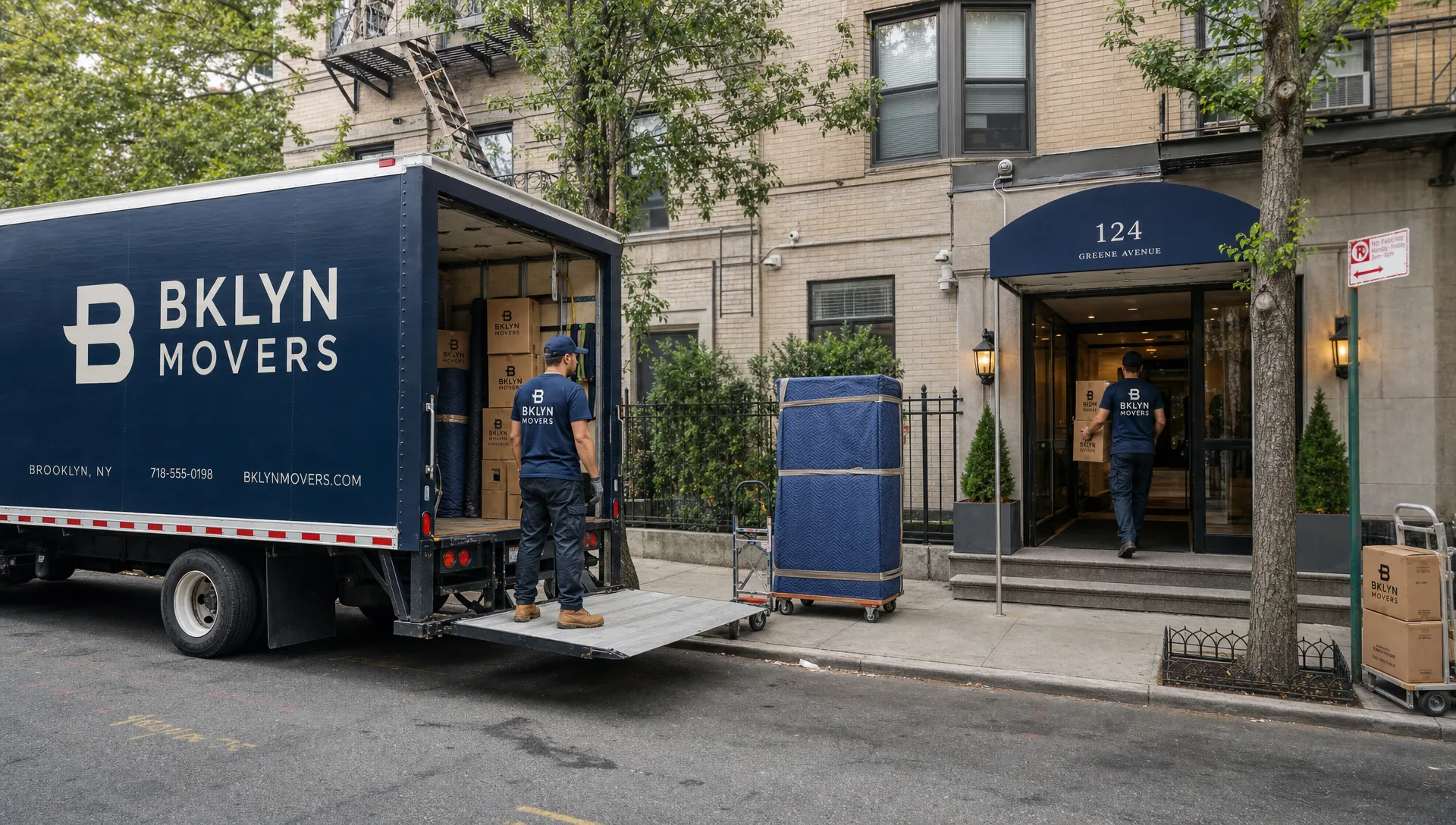
Relevant local relationships can produce referrals and useful mentions of your business. Start with property managers, real estate agents, storage providers and building management teams that work with the same customers.
Offer something practical: a building move-preparation checklist, a clear explanation of your scheduling process or a contact person for access questions. A useful resource gives another business a reason to recommend you beyond a request for a backlink.
Those relationships can extend to property preparation. Customers getting a home ready for sale or handover may also need a painter. For example, WM Painting & Decorating provides painting and decorating services in Australia’s Illawarra and South Coast region. A relocation resource for that area could include this type of complementary service; build your own recommendations around providers serving your customers’ locations.
Vet businesses before referring customers and get permission before describing anyone as a partner. Relevance matters more than collecting large numbers of unrelated links.
Measure booked moves, not just search positions
Rankings and website visits help explain visibility, but neither tells you whether the schedule is filling with suitable jobs. Measure what happens after someone finds you.
Track inquiries, qualified inquiries, estimates issued and booked moves. Record why an inquiry was not suitable, such as an unsupported route, unavailable date or service you do not offer. These patterns can reveal problems in your website copy or targeting.
For example, repeated requests for long-distance moves may mean your service area is unclear. Plenty of suitable requests but few bookings may point to slow responses, an unclear estimate process or a mismatch between expectations and pricing.
Use Google Search Console to understand search visibility and website analytics to track actions such as form submissions and phone-link clicks. A phone-link click is not proof of a completed conversation. Compare those signals with your actual inquiry records, and avoid sending personal customer details into analytics tools.
Local SEO for moving companies becomes more useful when reporting connects visibility to qualified estimates and booked work, rather than stopping at traffic totals.
Fix the response process too
Assign responsibility for new inquiries and set a response standard your team can maintain. If you miss a call while loading a truck, have a process for returning it and recording the outcome.
As this explanation of fast lead response times makes clear, faster replies are a conversion improvement, not a direct Google ranking factor. Better rankings cannot recover every customer lost to an unanswered inquiry.
Use AI to reduce admin, not invent credibility
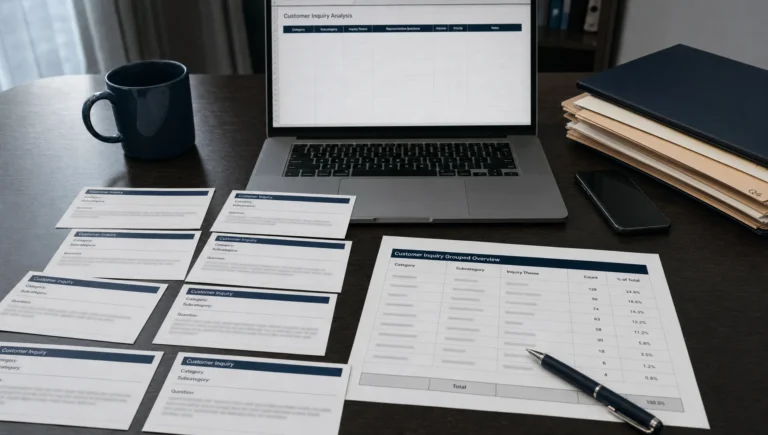
AI can help organize recurring customer questions, identify unclear website copy and draft service-page outlines. It can also group anonymized inquiry reasons so you can see whether unsuitable dates, locations or service requests are becoming a pattern.
Keep human review in place. Someone who understands your operation should verify service areas, pricing language, building procedures and regulatory claims before publication.
Do not use AI to fabricate reviews, invent completed jobs or produce dozens of near-identical neighborhood pages. Avoid uploading customer names, addresses or detailed inventories into tools without appropriate privacy safeguards. The practical benefit is less repetitive work, not a larger volume of unverified content.
A practical 90-day rollout
Treat the first three months as an implementation and learning period, not a ranking guarantee. Start with the problems closest to losing a suitable customer.
| Period |
Priority |
What to check |
| Days 1 to 30 |
Correct the Business Profile, clarify services and test mobile contact options |
Can a suitable customer find you and submit an inquiry successfully? |
| Days 31 to 60 |
Improve priority service pages, add genuine proof and establish a review-request process |
Are inquiries better aligned with your routes and services? |
| Days 61 to 90 |
Develop local referral resources, review inquiry outcomes and improve weak pages |
Which sources and pages contribute to qualified estimates and bookings? |
Compare results with your own baseline and account for seasonality, crew availability and changes in demand. If form submissions rise but qualified inquiries do not, refine the information customers see before they contact you.
Do not default to a complete website redesign. An existing site may need clearer service information, faster mobile performance and a better quote process before it needs a new visual identity.
Frequently asked questions
How long does local SEO take to generate moving leads? There is no fixed timeline. Correcting inaccurate information or broken forms can remove immediate obstacles, while stronger search visibility can take longer. Competition, location, existing visibility and website quality all affect progress.
Do moving companies need a page for every neighborhood? No. Create separate pages when you can provide distinct, useful information. A strong service-area page is better than many copied pages with different neighborhood names.
Can a service-area moving company appear on Google Maps? An eligible service-area business can have a Google Business Profile. Follow Google’s address and eligibility rules, including hiding an address when customers are not served there. Listing an area does not guarantee visibility throughout it.
Should the website publish moving prices? Publish accurate pricing guidance if you can explain its conditions clearly. Describe what affects the estimate and distinguish an initial estimate from a confirmed booking. Do not advertise a low starting price that misrepresents typical jobs.
Get a plan focused on better moving leads
Sleek Web Designs helps service businesses improve website clarity, local visibility and lead generation through website optimization, local SEO and AI-assisted analysis. There are no long-term contracts.
If your website attracts the wrong inquiries or makes suitable customers work too hard to contact you, talk with Sleek Web Designs about what to fix first. Start with the issues affecting estimates and bookings, not a redesign you may not need.