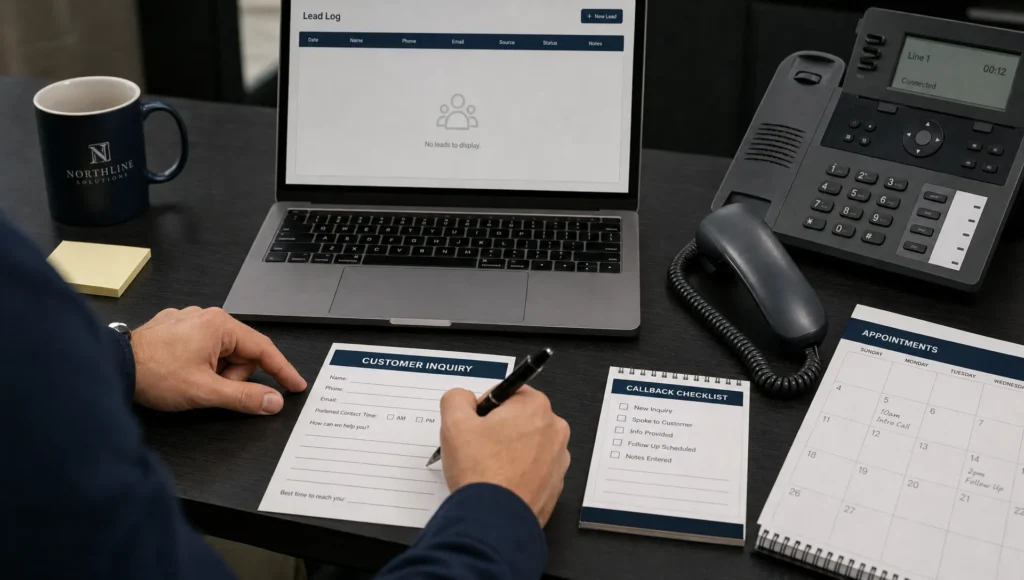
Your business can appear on Google Maps, attract the right visitor and still lose the job before anyone on your team starts a conversation. Slow lead response times give that customer a reason to call someone else. For local service businesses, getting found is only part of the work. You also need a reliable way to answer inquiries and move qualified prospects toward a booking.
Fast replies are not a shortcut to higher Google rankings. They help turn the visibility you already have into calls, appointments and paying customers. Here is how to build that connection without creating a complicated sales process.
Do faster responses improve local search rankings?
Google does not identify lead response speed as a direct local ranking factor. Its published guidance explains that local results are mainly based on relevance, distance and prominence. You can review those factors in Google’s guidance on improving local rankings.
That distinction matters. Answering a website inquiry in three minutes instead of three hours does not automatically move your business higher in the Map Pack.
What it can change is the business value of that visibility. If more qualified inquiries become appointments, your local SEO efforts produce more revenue without necessarily producing more traffic.
There is also a customer-experience connection. Helpful communication can contribute to a better service experience, which may encourage genuine reviews. Google says more reviews and positive ratings can help local ranking, but faster replies alone do not guarantee either outcome.
Treat lead response times as a conversion priority that supports your local SEO investment, not as a hidden ranking trick.
Someone searching for an emergency plumber has a different deadline from someone comparing contractors for next spring. Both need a response, but the urgency is different.
For example, A&V Drain’s 24/7 emergency plumbing services in Toronto illustrate a category where advertised availability matters. A customer dealing with a drain backup may keep calling providers until someone confirms that help is available. A business making a round-the-clock availability promise needs a response process that supports it.
The same principle applies to less urgent services. A driving school prospect may want lesson availability before choosing an instructor. A cleaning customer may need a quote before a move-out date.
A useful first response reduces uncertainty. It confirms that the inquiry reached the right business, checks whether the job is a fit and explains what happens next. A generic “Thanks for contacting us” does none of those things on its own.
Set lead response times your team can actually meet
There is no universal response target that works for every local business. Set standards around customer urgency, your staffing and the hours you advertise.
The following are practical starting points, not Google requirements or proven conversion thresholds:
| Inquiry type |
Suggested response standard |
What the customer needs |
| Emergency service call |
Live answering or immediate routing to an on-call person |
Confirmation of availability and a clear next step |
| Time-sensitive quote or booking |
Aim for a human reply within 15 minutes during staffed hours |
A few qualifying questions and scheduling options |
| Routine service inquiry |
Aim for a human reply within one business hour |
Confirmation of fit and an expected quote or booking timeline |
| Nonurgent after-hours form |
Immediate acknowledgment with a specific callback window |
An honest explanation of when a person will respond |
Start with a standard you can maintain. A realistic callback promise is more useful than an impressive target your team regularly misses. Do not promise emergency coverage or a technician’s arrival time unless you can deliver it.
Fix the handoff between your website and your team
A lead can disappear between a form submission and the person responsible for answering it. Improving this handoff often requires clearer ownership rather than new software.
Give every inquiry an owner
Assign one person to monitor incoming inquiries during each coverage period, with a named backup. A shared inbox without ownership makes it easy for everyone to assume someone else has replied.
For phone inquiries, decide what happens when the main line is busy or unanswered. That might mean forwarding to another employee, using an answering service or triggering a callback task. Choose a setup that matches your business rather than paying for features nobody will manage.
A service inquiry form usually needs a name, contact method, service location and a short description of the request. Ask about urgency when it affects routing.
Avoid making someone complete a lengthy questionnaire just to request a callback. Your team can gather detailed job information once the conversation begins.
The confirmation message should explain the next step. For example: “We received your lesson inquiry. Our office will call during business hours to discuss availability.” Only add a precise deadline if someone owns that commitment.
Use a clear tap-to-call button, a short form and accurate business hours. Check that the phone number connects to the right line and that submissions reach a monitored inbox.
Page loading and staff response are separate problems. If visitors struggle before they can contact you, prioritize the website speed fixes that affect lead generation. A faster page cannot compensate for an unanswered inquiry, and a fast callback cannot recover a form that never worked.
Use AI to reduce delays, not imitate availability
AI can help summarize inquiries, suggest replies and organize requests by service type. These are practical uses when they reduce the administrative work between receiving a lead and contacting that person.
Keep firm boundaries around what automation can promise. An assistant should not invent prices, confirm unavailable appointments or guarantee that a technician is on the way. Route urgent requests to a person rather than relying on AI to make safety decisions.
An automated acknowledgment is useful, but it is not the same as a human response. Measure the two separately so an instant confirmation does not hide a six-hour callback delay.
For a small team, a dependable notification and a clear callback owner may be enough. Add AI only where it removes a real bottleneck in your lead response times.
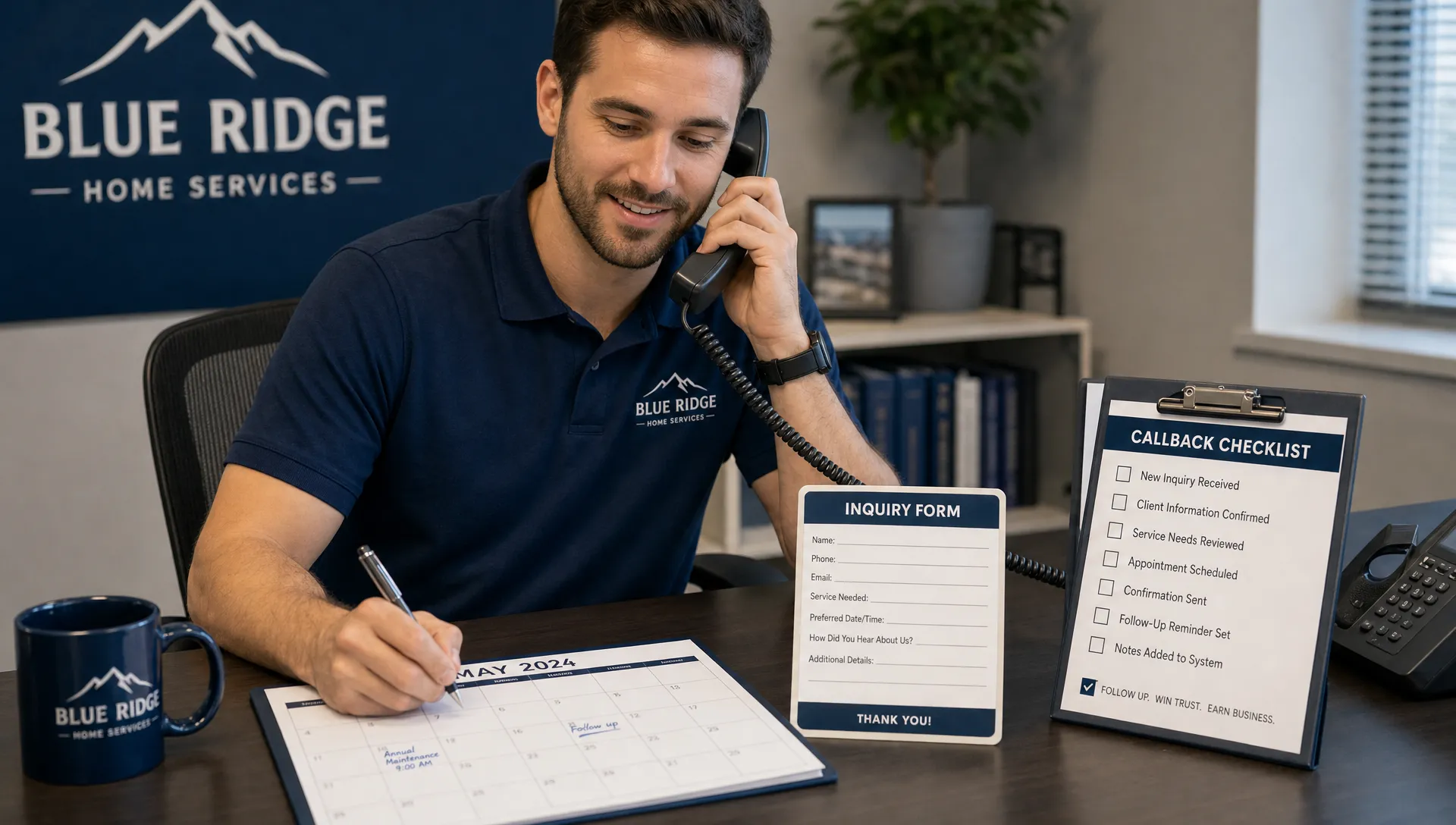
Measure whether faster replies produce more bookings
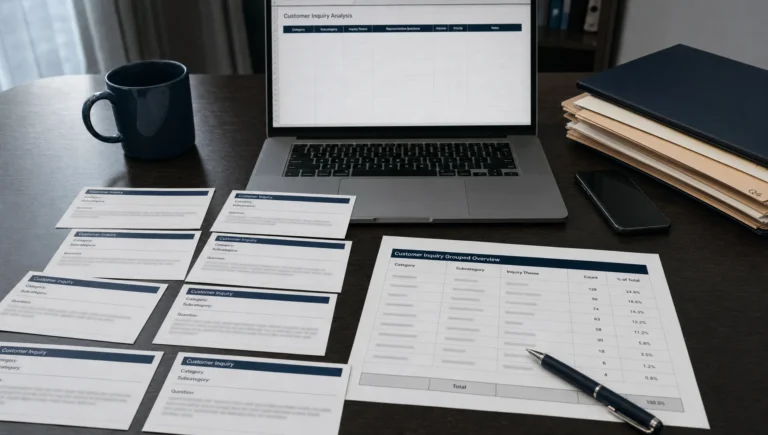
You do not need a complex dashboard to start. A shared spreadsheet can connect response activity to business outcomes, provided someone keeps it current.
Record when each inquiry arrived, when a person first responded, whether the prospect was qualified and whether the job was booked. Also record the source when known, such as Google Business Profile, organic website traffic or a referral.
Focus on a few useful measures:
- First human response time: The gap between receiving the inquiry and a person replying, reported separately for staffed hours and after-hours requests.
- Missed-call recovery: How many unanswered inquiries receive a callback and how quickly your team makes that attempt.
- Contact rate: The share of inquiries that become actual conversations, rather than counting an unanswered callback as successful contact.
- Qualified lead-to-booking rate: The share of suitable inquiries that turn into scheduled work.
Review typical response time alongside the longest delays. An average can look acceptable while a handful of weekend inquiries sit untouched until Tuesday.
Exclude obvious spam from your operational comparison and separate out-of-area requests from qualified opportunities. Otherwise, changes in lead quality can make your follow-up process look better or worse than it is.
If you need a broader view of marketing performance, these metrics to track before spending more on local SEO help put response data in context.
Test the whole process before buying more traffic
Submit a test form from your phone and call your business while the main line is busy. Check what a customer experiences, not just whether the software says everything is connected.
Does the confirmation arrive? Does the right employee receive the alert? Is there a backup when that person is unavailable? Does the callback promise match your actual coverage?
Fix the most common failure first, then compare lead response times and booking outcomes over several weeks. For a low-volume business, avoid drawing conclusions from just a few inquiries. Note changes in seasonality, service mix or staffing that could also affect results.
Improving this process will not solve poor targeting, weak service pages or inaccurate business information. It does stop avoidable delays from wasting the demand your marketing generates.
Frequently asked questions
Will faster lead responses move my business higher on Google Maps? Google does not list inquiry response speed as a direct local ranking factor. The immediate benefit is a better chance of converting existing visibility into conversations and bookings. Keep working on relevance, accurate business information and genuine customer reviews.
Does an automated text count as responding to a lead? It counts as an acknowledgment, not a human response. It can confirm receipt and explain when someone will follow up, but it should not be used to make your response reporting look faster than the customer experience really is.
What if I cannot answer calls while working on a job? Set up a realistic backup. Depending on your workload, that could be call forwarding, an answering service or a monitored callback queue. Publish accurate hours and avoid advertising immediate availability unless someone can handle those inquiries.
Should I improve follow-up before investing more in SEO? Fix obvious response failures first while maintaining essential SEO work. If qualified prospects already contact you but regularly go unanswered, increasing traffic can increase waste instead of bookings.
Make your existing visibility work harder
Before paying to attract more visitors, make sure current prospects can reach you and get a useful reply. Clear contact options, reliable routing and honest response expectations give your local SEO a better chance to produce booked work.
Sleek Web Designs helps service businesses improve website performance, local visibility and lead generation, with practical AI-assisted analysis where it adds value. There are no long-term contracts. Ask for a website audit to identify where contact friction may be costing you inquiries.