Local visitors do not choose a plumber, contractor, driving school or home service company because the website looks nice. They choose the business that feels legitimate, nearby and easy to contact. Good web design supports that decision, but the goal is not decoration. The goal is more calls, form submissions and booked jobs.
Trust signals are the small details that tell a visitor they are in the right place. They reduce doubt before a person calls, especially when that person has never worked with you before. If your website gets traffic but does not generate enough leads, weak trust signals may be part of the problem.
Why trust signals matter for local visitors
Local buyers move quickly. Someone looking for AC repair, a driving lesson, house cleaning or a roofing estimate is usually comparing a few businesses at once. They may find you through Google Maps, an organic search result, a referral or an ad. Once they land on your site, they are asking a simple question: can I trust this business enough to call?
That decision is not based on one element. It comes from the full experience: your reviews, service area, photos, phone number, page speed, copy, credentials and how clearly you explain the next step.
A custom website should make those answers obvious. If visitors have to search for proof, wonder where you work or guess what happens after they submit a form, many will leave and call a competitor.
1. A clear local identity
The first trust signal is basic, but many local websites get it wrong. Visitors should immediately understand who you are, where you work and what you do.
That means your homepage and service pages should clearly show your business name, primary service, city or service area, phone number and a direct call to action. If you serve Brooklyn, Queens or a set of nearby towns, say so clearly. Do not bury that information in the footer or on a contact page only.
Local identity also includes visual proof. Real photos of your team, vehicles, office, classroom, equipment or completed work can build more trust than stock images. A driving school can show its training vehicles. A contractor can show before and after photos. A cleaning company can show staff in branded shirts.
This also supports local SEO because Google and potential customers both need consistent location signals. If you want to go deeper into how location signals affect visibility, Sleek Web Designs has a guide on local search ranking signals that influence business visibility.
2. Reviews that feel real and recent
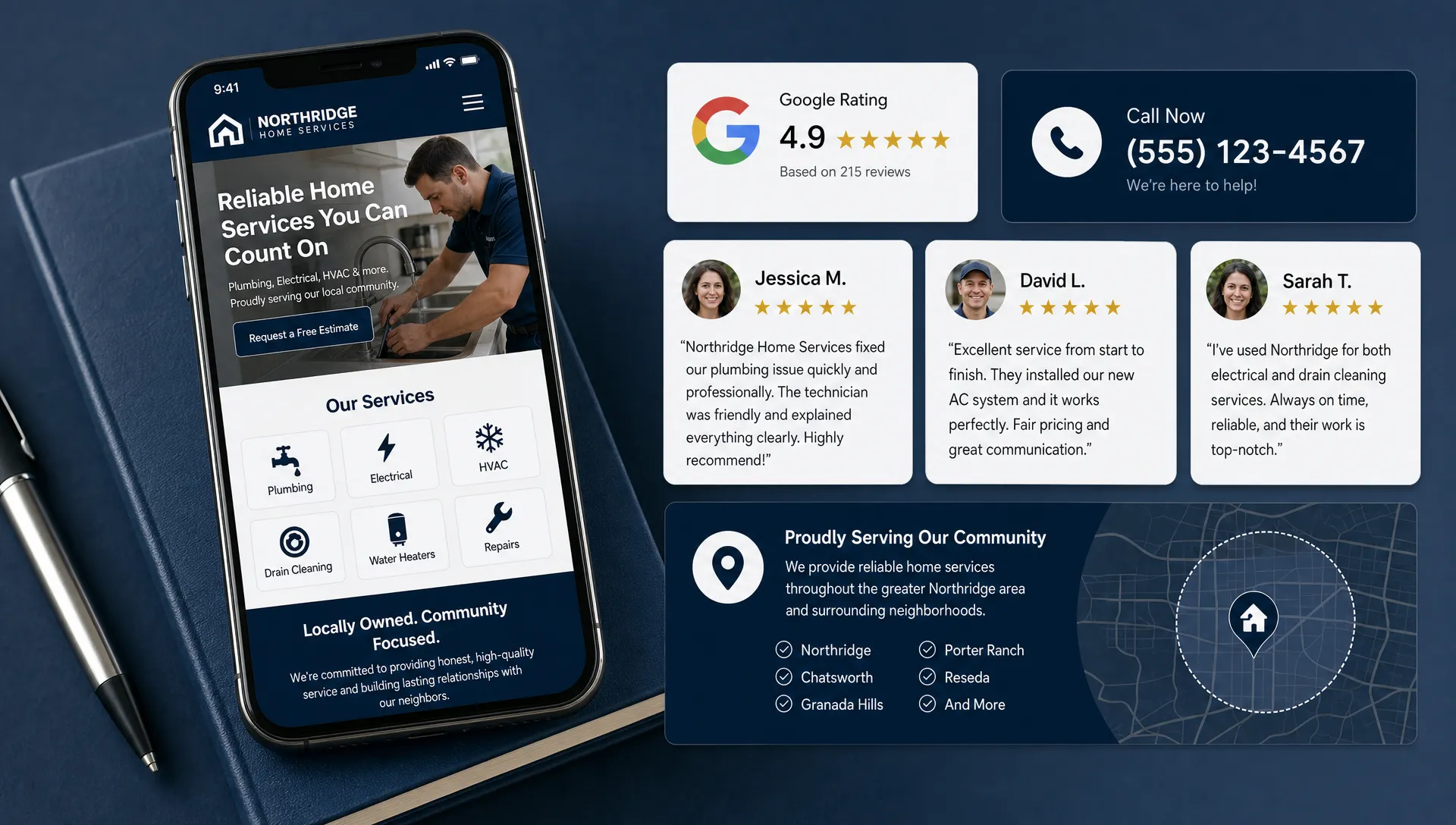
Reviews are one of the strongest trust signals for local businesses because they show that other people have already taken the risk. A visitor may not know you, but they can recognize a pattern in what customers say.
Do not hide reviews on a separate page that few people visit. Place short review excerpts near your calls to action, service sections and contact forms. If your Google Business Profile has strong reviews, mention that clearly. If you have reviews on other relevant platforms, use those too.
The best reviews are specific. A generic review like great service helps a little. A review that mentions fast response, clean work, fair pricing, patient driving instructors or a job completed on schedule does much more. It answers the concerns visitors already have.
Make sure reviews are current. A website that only shows testimonials from several years ago can feel neglected, even if the business is active. Recent proof tells visitors that people are still choosing you today.
Third-party reviews can also support search visibility when handled correctly. For more on that, read this practical breakdown of how third-party reviews can boost SEO and credibility.
3. A fast, mobile responsive website
A slow or awkward mobile experience damages trust before visitors read a word. Local buyers often search from a phone while they are between tasks, in their car or dealing with a problem that needs a quick answer. If your site loads slowly, text is hard to read or the phone number is difficult to tap, you are making the decision harder.
A mobile responsive website should make the next action obvious. The phone number should be visible. Buttons should be easy to tap. Forms should be short enough that a busy person can complete them without frustration. Service information should not require pinching, zooming or digging through cluttered menus.
Speed matters because it affects both user experience and conversions. It also affects how professional your business feels. A visitor may not know why the site is slow, but they will still form an opinion.
The same principles that work for high-intent landing pages apply to local service websites. This guide to fast, focused, credible landing pages is useful if you want to understand how speed, focus and credibility work together to turn skeptical visitors into leads.
4. Copy that answers buyer concerns
Your website copy should not sound like a brochure. It should answer the questions local visitors have before they call.
For most service businesses, those questions are simple. Do you handle my problem? Do you serve my area? Are you qualified? How soon can I speak with someone? What happens after I request a quote? Why should I choose you over the next business on Google?
Strong copy answers these questions in plain language. It does not overexplain technical details or make vague claims like best service in town. It explains what you do, who you help and what result the customer can expect.
For example, a driving school website should make lesson types, service areas, scheduling steps and instructor trust factors easy to find. A contractor website should show project types, local service areas, proof of work and the simplest way to request an estimate.
Your homepage is especially important because it often gets the first visit. If that page is vague, the rest of the site has to work harder. This guide on homepage copy that gets calls for local services shows how to structure your message around leads instead of filler.
5. Visible process, credentials and next steps
Trust improves when visitors know what will happen next. Many websites ask people to call or fill out a form without explaining the process. That creates friction, especially for first-time customers.
Add a simple process section. It does not need to be fancy. For many local businesses, three steps are enough: request a call, discuss the job, schedule service. A driving school might use choose a lesson package, book your time, start training. A contractor might use request an estimate, review the scope, schedule the work.
Credentials matter too. If your industry uses licenses, insurance, certifications, background checks, safety standards or association memberships, show them where they support the buying decision. Do not assume visitors will ask. Many will simply leave if they cannot find proof.
Policies can also create trust. Examples include free estimates, clear scheduling windows, service guarantees, cancellation policies or no-obligation consultations. Only include what is true for your business. Fake or exaggerated trust signals hurt more than they help.
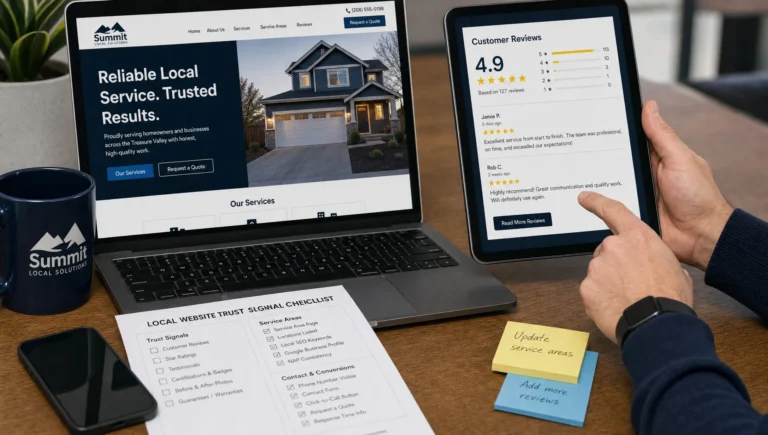
Quick trust signal checklist
Use this table to review your website through the eyes of a local visitor. If several items are missing, your website may be losing leads even if it receives decent traffic.
| Trust signal | What visitors should see | Business outcome |
|---|---|---|
| Local identity | City, service area, phone number and real business details | More confidence that you serve their location |
| Reviews | Recent customer feedback near key calls to action | Less hesitation before calling or submitting a form |
| Mobile experience | Fast loading pages, tap-friendly buttons and readable text | More calls from visitors searching on phones |
| Clear copy | Services, benefits, service areas and next steps explained plainly | Fewer confused visitors leaving the site |
| Credentials and process | Licenses, proof, policies and a simple explanation of what happens next | Higher trust from first-time customers |
You do not need to rebuild everything at once. Start with the pages that already get traffic, usually your homepage, main service pages and contact page. An AI-assisted website audit can help identify missing trust signals, unclear copy and technical issues faster, but the fixes still need to be practical and tied to leads.
When a website redesign makes sense
A website redesign makes sense when the current site is hard to use, slow, outdated or not built around conversions. But redesigning only for a new look is usually a mistake. A better-looking site that still hides the phone number, lacks reviews and says nothing specific about your service area will not solve the real problem.
Before starting a redesign, ask these questions:
- Can visitors tell what we do within a few seconds?
- Is the phone number easy to find and tap on mobile?
- Do we show recent proof from real customers?
- Are our service areas clear?
- Does every important page have a direct next step?
If the answer is no to several of these, your site likely needs more than cosmetic changes. It needs a lead generation structure. That may include better homepage copy, stronger local SEO, cleaner page layouts, improved speed and trust signals placed where visitors make decisions.
For many small businesses, this is where working with a focused SEO agency or web design partner helps. The point is not to add complexity. The point is to fix what is blocking calls and visibility.
FAQ
What are trust signals on a local business website? Trust signals are elements that make visitors feel confident contacting your business. Examples include reviews, local service area details, real photos, credentials, clear contact information and a simple explanation of your process.
Do trust signals help local SEO? Yes, some trust signals support local SEO directly, such as consistent business information, reviews and location-focused content. Others help indirectly by improving engagement, calls and conversions from visitors who already found you.
Where should I place reviews on my website? Place reviews near decision points, such as the homepage hero section, service pages, contact forms and estimate request sections. Do not limit reviews to one testimonial page that visitors may never open.
Is mobile responsive design really that important for local leads? Yes. Many local searches happen on phones. If visitors cannot read your site, tap your number or submit a simple form, they are more likely to choose another business.
Should I redesign my website or just update the content? If your site is technically solid, content and trust signal updates may be enough. If it is slow, confusing, outdated or difficult to use on mobile, a full website redesign may be the better move.
Turn more local visitors into calls
If your website is getting visits but not enough calls, the problem may not be traffic. It may be trust. Visitors need clear proof that you are local, credible and easy to work with.
Sleek Web Designs helps small businesses improve website structure, local SEO and lead generation without overcomplicating the process. We focus on the pieces that affect visibility, calls and customer growth. No vanity metrics. No long-term contracts.
If you want a clearer website that helps local visitors choose you, start with a practical review of what is working, what is missing and what needs to be fixed next.