If your business goes to the customer, Google still gives you a real shot at local visibility. Plumbers, HVAC companies, cleaning businesses, contractors, mobile mechanics, tutors, driving schools and other service providers do not need a storefront to compete in search.
What you do need is a clear local SEO setup that matches how your business actually operates. Trying to look like a storefront when you are not one can create problems. Using a fake address, stuffing city names into your profile or building duplicate location pages may give you a short-term bump, but it can also lead to suspensions, weak rankings and poor leads.
Service area business SEO is about proving three things clearly: what you do, where you work and why local customers should trust you enough to call.
What Is a Service Area Business?
A service area business is a company that serves customers at their location instead of receiving customers at a public office or storefront. Common examples include:
- HVAC repair companies
- Plumbers and electricians
- Cleaning services
- Contractors and remodelers
- Mobile notaries
- Driving schools
- Locksmiths
- Real estate photographers
- Home health service providers
Google allows these businesses to create a Google Business Profile without showing a public address, as long as the business has direct contact with customers and follows the platform's rules. If you work from home, your home address should usually stay hidden. If customers cannot walk in during listed business hours, do not present that address as a public office.
If you are unsure where the line is, Sleek Web Designs has a separate guide that explains whether you can create a Google Business Profile without a physical address and what to watch before setting it up.
The key point is simple: you can rank without an office, but you need to build trust in other ways.
Why Ranking Without an Office Is Different
A storefront has one built-in local advantage: a visible location on the map. A service area business has to rely more heavily on service relevance, reviews, website content, local proof and consistent business information.
That does not make SEO impossible. It just changes the work.
| SEO challenge |
Why it matters |
What to do instead |
| No public office |
Google has less visible location proof |
Set a correct service area and build strong local signals |
| Weaker proximity signal |
You may not appear as close to every searcher |
Create relevant service and city pages tied to real coverage areas |
| Lower initial trust |
Customers cannot visit a storefront |
Use reviews, project proof, photos and clear contact details |
| Thin location content |
Generic city pages rarely help |
Write useful pages based on real services in each area |
| Poor conversion path |
Traffic does not matter if people do not call |
Build a mobile responsive website with clear calls to action |
This is where many service businesses lose leads. They think the problem is just rankings, but the website often fails at the same time. If the page loads slowly, the phone number is hard to find or the service area is unclear, people leave before contacting you.
Set Up Your Google Business Profile the Right Way
Your Google Business Profile is usually the first place to fix. It can appear in Maps, local pack results and branded searches. For service area businesses, accuracy matters more than trying to game the system.
Start with the basics. Use your real business name, not a keyword-stuffed version. If your company is called “Smith Heating,” do not change it to “Smith Heating Best HVAC Repair Brooklyn Queens Nassau.” That looks unnatural and can create trust issues.
Choose the most accurate primary category. This affects what searches you can show up for, so do not pick a category just because it has high search volume. A driving school should use a driving school category. A plumber should use a plumbing-related category. Accuracy helps Google understand when your business is a good match.
Set your service areas based on where you actually work. Do not list every city in the state unless you truly serve them and can handle calls from those locations. A smaller, realistic service area often performs better than a bloated one that sends confusing signals.
Then complete the profile with practical details:
- Real business hours
- A working phone number
- Service descriptions written in plain language
- Photos of your team, vehicles, equipment or completed work
- A clear website link
- Regular updates when services, hours or coverage areas change
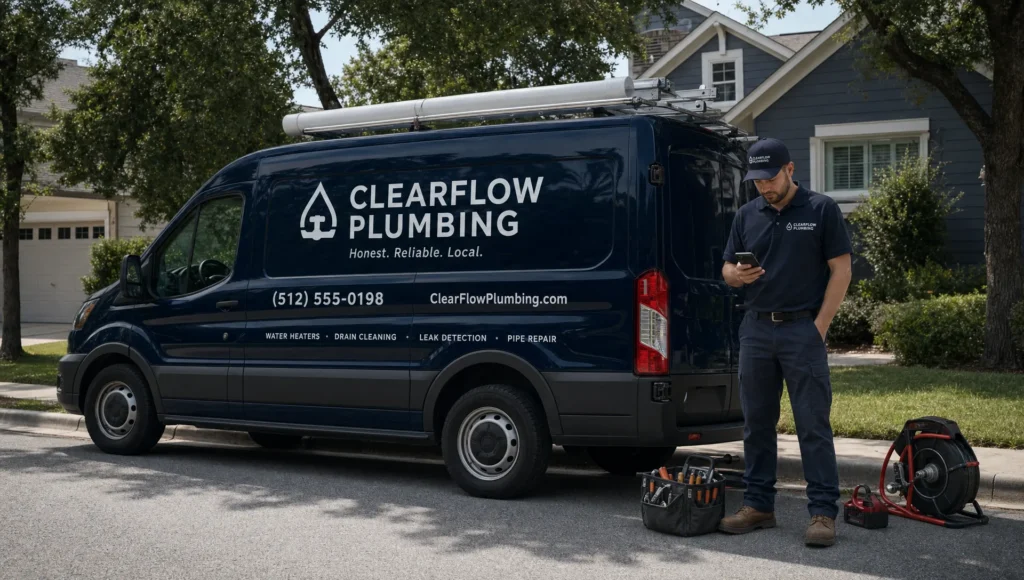
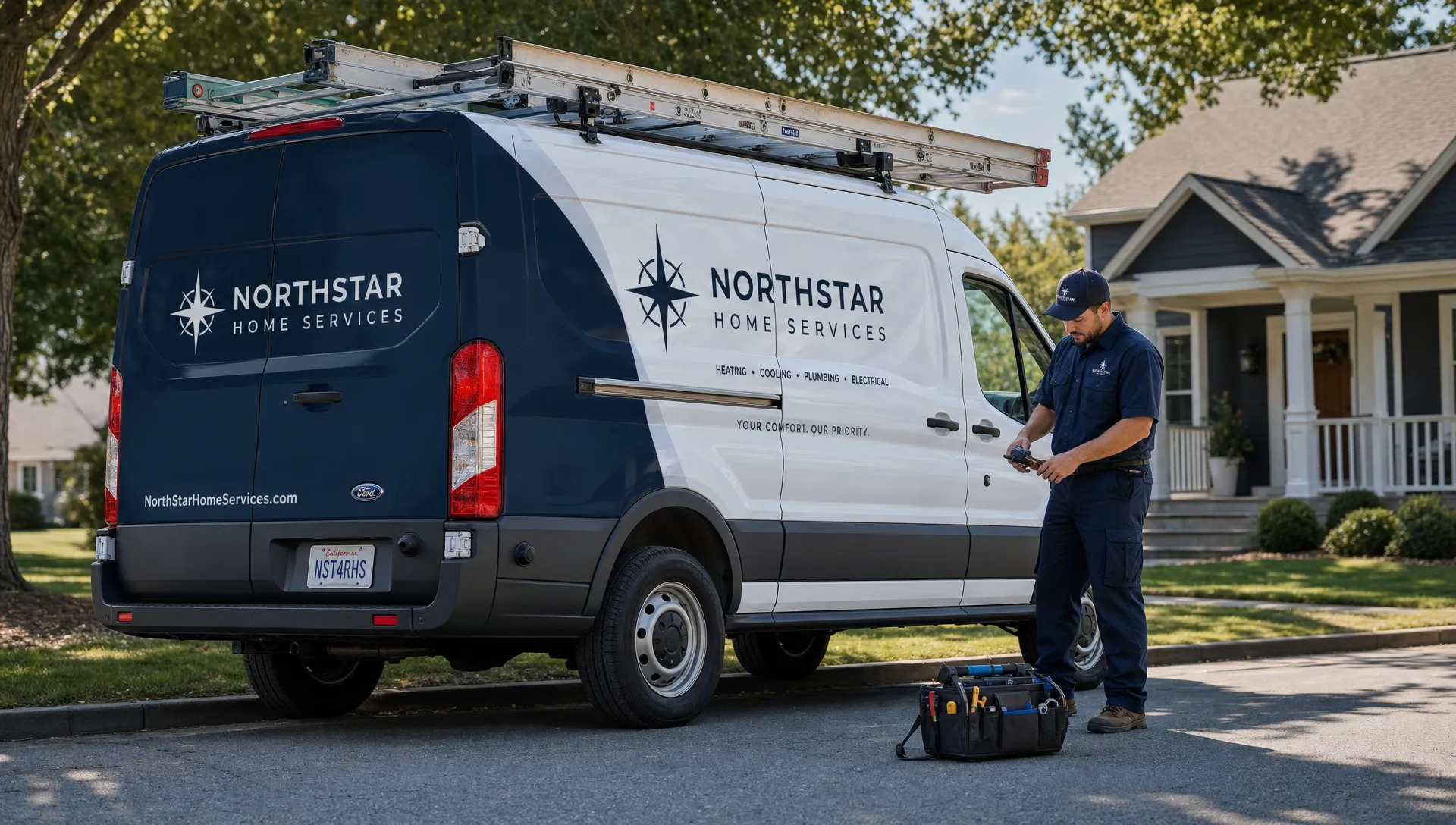
Photos matter more than many business owners think. A service van, technician at a job site, branded uniform or classroom vehicle can all help customers see that your business is real. You do not need polished stock-style images. Real proof usually performs better.
Build Service Pages That Match How People Search
Your website should not be a digital brochure. For a service area business, it should act like a lead-generation system that explains your services, matches local search intent and makes it easy to contact you.
Most service businesses need two types of pages: service pages and service area pages.
A service page targets the work itself, such as “AC Repair,” “Bathroom Remodeling,” “Commercial Cleaning” or “Driving Lessons.” These pages should explain the service, who it is for, common problems, what happens when someone contacts you and why your company is a good fit.
A service area page focuses on a specific city, neighborhood or borough where you actually serve customers. This does not mean copying the same page 20 times and swapping the city name. That is weak SEO and weak sales copy.
A strong service area page should include real local relevance. Mention the services you provide in that area, customer problems that are common there, nearby neighborhoods if relevant and practical reasons someone in that location should call you.
For example, a driving school page for one neighborhood might discuss road test access, local traffic patterns and beginner driver needs. A contractor page might talk about common home types, permit concerns or seasonal project timing. A cleaning service might discuss apartment turnover, office cleaning needs or recurring home cleanings in that area.
If you are building a broader plan, this guide to an effective local SEO strategy explains how business listings, competitor research and local content work together.
Avoid Doorway Pages and Thin City Pages
A doorway page is a low-value page created only to rank for a city or keyword. Service area businesses are especially likely to fall into this trap because they want to appear in several towns.
Google and customers both want useful pages. If someone lands on your page for “water heater repair in Park Slope,” the page should give them confidence that you actually provide water heater repair in Park Slope.
Here is the difference:
| Weak city page |
Strong service area page |
| Same copy as every other city page |
Unique details tied to the area |
| Repeats the city name unnaturally |
Uses location terms where they make sense |
| No proof of service |
Includes reviews, examples or local service details |
| Generic call to action |
Clear phone number, form and next step |
| Written only for Google |
Written for a real customer deciding who to call |
You do not need hundreds of pages. You need enough useful pages to cover your most important services and real service areas. Start with the locations that bring your best customers, highest margins or most repeat work.
Make Your Website Easy to Trust and Easy to Use
Local SEO gets people to the page. Web design helps turn those visitors into leads.
For service area businesses, good web design is not about animations, fancy layouts or oversized brand statements. It is about clarity. A visitor should know within a few seconds what you do, where you work and how to contact you.
Your site should include a clear phone number at the top of the page, especially on mobile. Forms should be short. Service pages should answer the questions customers ask before they call. If your website is old, slow or hard to use on a phone, a website redesign may produce more leads even before rankings improve.
Important conversion elements include:
- A click-to-call phone number on mobile
- Clear service area language
- Trust signals such as reviews, licenses, insurance or years in business if applicable
- Fast-loading pages
- Simple navigation
- Calls to action near the top and bottom of key pages
- Contact forms that ask only for necessary information
A mobile responsive website is not optional anymore. Many local searches happen from phones, especially when someone needs help quickly. If the page is hard to read or the call button is buried, that lead may go to the next company.
Use Reviews as Local Proof
When you do not have a storefront, reviews become one of your strongest trust signals. They help with conversions, and they can support local visibility when they mention real services and real areas naturally.
Do not script reviews or ask customers to stuff keywords into them. That can look fake. Instead, ask after a completed job while the experience is fresh. Make the process simple. Send a direct review link and ask for honest feedback.
A good review request might sound like this: “Thanks for choosing us for your AC repair today. If you were happy with the service, would you mind leaving a quick Google review? It helps local customers know what to expect.”
When customers naturally mention the service and location, that is useful. A review that says “They fixed our furnace in Bay Ridge the same day” is more helpful than a vague “Great service.” But the wording should come from the customer, not from a script.
Respond to reviews as well. Thank people by name when appropriate, mention the service in a natural way and keep responses professional. Review responses show future customers that you are active and attentive.
Build Local Citations Without Publishing the Wrong Address
Citations are mentions of your business information across the web. They can appear on directories, industry sites, local chambers, social profiles and business listings.
For service area businesses, citation work needs a careful approach. If you operate from home and hide your address on Google, you usually do not want your home address spread across directories. Focus on consistent business name, phone number, website and service area information where possible.
Quality matters more than raw quantity. A few accurate listings on relevant platforms can help more than dozens of low-quality directory profiles. For contractors, trade directories may matter. For driving schools, education or local service directories may be useful. For nonprofits or local organizations, community listings may make sense.
Consistency reduces confusion. If one site lists an old phone number, another shows an old business name and another displays a home address you no longer use, search engines and customers can get mixed signals.
Create Content That Supports Local Buying Intent
Many small businesses hear “content marketing” and think they need to publish blog posts every week. That is not always the best use of time.
For service area business SEO, content should answer questions that lead to calls. A plumber does not need a generic article about the history of plumbing. A better topic might be “Why Your Water Heater Keeps Running Out of Hot Water” or “What to Do Before Calling for Emergency Drain Cleaning.”
Good local content can include:
- Service FAQs based on real customer questions
- Neighborhood-specific service pages
- Before and after project summaries
- Seasonal maintenance guides
- Cost explanation pages when pricing depends on the job
- Problem-based pages, such as “AC Not Cooling” or “Road Test Anxiety Help”
This is where SEO copywriting matters. The words on the page should help Google understand the topic, but they should also help customers make a decision. If your pages sound generic, thin or copied from another company, they will not build much trust. For a deeper look at this, see Sleek Web Designs’ guide to SEO copywriting for local search visibility.
Use AI for Analysis, Not Generic Content
AI can be useful for service area SEO when it is used properly. It can help identify thin pages, compare service coverage, organize keyword themes, summarize customer review patterns and flag missing on-page elements.
What it should not do is pump out dozens of generic city pages with the same structure and no real local insight. That creates noise. It may also make your business sound like every other company in your market.
A practical AI-assisted SEO process might include reviewing your website structure, finding pages that do not clearly explain services, checking whether calls to action are visible and spotting missed local search opportunities. The final decisions still need business judgment. You know which calls are profitable, which cities you want to serve and which jobs you would rather avoid.
For businesses in specialized markets, the same principle applies beyond home services. Industrial and B2B companies often need content that matches real buyer intent, not broad marketing terms, which is why reviewing firms that focus on inbound marketing and SEO services for industrial companies can be useful when thinking about search strategy in harder-to-explain industries.
Track Leads, Not Just Rankings
Rankings are useful, but they are not the final score. A service area business needs calls, form submissions, booked jobs and better-fit customers.
Track the numbers that connect SEO to business results. If you only watch impressions or traffic, you may miss whether the work is producing revenue.
| Metric |
What it tells you |
Why it matters |
| Google Business Profile calls |
How many calls come from Maps and local search |
Shows local visibility impact |
| Website form submissions |
How many visitors request service |
Measures conversion performance |
| Click-to-call actions |
How mobile visitors respond |
Helps evaluate mobile usability |
| Service page traffic |
Which services attract demand |
Guides content and optimization priorities |
| Search queries in Search Console |
What people type before finding you |
Reveals new page and FAQ opportunities |
| Lead quality |
Whether inquiries fit your business |
Prevents chasing traffic that does not convert |
This is also where a results-driven SEO agency should be direct with you. More traffic is not always better. More of the right calls is better.
Common Mistakes That Hold Service Area Businesses Back
A few mistakes show up again and again.
- Using a fake office address to rank in a city
- Listing a home address publicly by accident
- Creating duplicate pages for every nearby town
- Targeting broad keywords instead of service and location intent
- Ignoring Google Business Profile updates after setup
- Building a nice-looking website that does not generate calls
- Asking for reviews only once or not at all
- Tracking rankings but not calls or form submissions
The biggest mistake is treating SEO as a one-time setup. Local competitors change. Reviews grow stale. Service areas shift. Website pages age. Your strategy needs maintenance, even if it does not need to be complicated.
When a Service Area Business Should Get Help
If you are already busy running jobs, answering calls and managing staff, doing SEO properly can be hard to keep up with. That is where working with the right partner can help.
Look for someone who asks practical business questions before talking about rankings. Which services are most profitable? Which towns do you actually want more calls from? Are you getting traffic but no leads? Is the website clear on mobile? Are your reviews strong enough to support trust?
A good local SEO and web design partner should focus on visibility, calls and customer growth. Not vanity reports. Not long-term contracts that lock you in without results. Not a custom website that looks nice but fails to bring in leads.
Sleek Web Designs works with service-based businesses that need a clearer website, stronger local SEO and a simpler path to more qualified leads. If your business serves customers across an area but does not have a public office, the strategy should fit that reality.
Frequently Asked Questions
Can a service area business rank on Google without showing an address? Yes. Many service area businesses can rank without showing a public address if the Google Business Profile is set up correctly, the service area is accurate and the website supports local relevance.
Should I use a virtual office for local SEO? Usually no. If the office is not staffed and customers cannot visit during business hours, using it as a public business location can create problems with Google and damage trust.
How many service area pages should I create? Start with your most important real service areas. It is better to build five strong pages with useful local details than 50 thin pages that only swap city names.
Do reviews help service area business SEO? Reviews help build trust and can support local visibility. The best reviews mention real services and experiences naturally, without being scripted or forced.
How long does service area SEO take to work? It depends on competition, your current website, reviews, Google Business Profile strength and service area size. Many businesses need several months of steady work before seeing stronger lead flow.
Turn Local Visibility Into Real Leads
You do not need a storefront to get found. You need a clean Google Business Profile, useful service pages, consistent local proof, strong reviews and a website built to convert visitors into calls.
If your current site is not producing enough leads, Sleek Web Designs can help identify what is holding it back and build a simpler plan around local visibility, website optimization and customer growth. No overcomplicated marketing. No long-term contracts. Just practical work focused on getting your service business more of the right calls.