Local SEO for pest control companies should bring in calls you can actually turn into jobs, not just more website visits. A homeowner searching for bed bug treatment has a different need from a property manager looking for ongoing rodent control. Your Google listing, website and booking process need to make those differences clear.
The practical goal is simple: get found for the services you provide, within the areas you can serve, then make contacting you easy. This plan connects local visibility with qualified inquiries, realistic scheduling and booked work.
Local SEO for pest control companies starts with service priorities
Before changing your website, decide which jobs you want more of. Start with the intersection of customer demand, your capabilities and the travel time your team can handle.
You do not need to target every pest problem in every nearby town. Expanding visibility beyond your workable service area can create calls your office has to turn away.
Use a planning table like this, keeping only services your business actually provides:
| Search intent | What the customer needs to know | Useful website destination |
|---|---|---|
| Rodent control in a specific area | Whether you handle the problem and serve the property location | Rodent control service page |
| Bed bug treatment near me | How assessment works and how to request an appointment | Bed bug service page |
| Termite inspection in a specific area | Whether inspections are offered and what happens next | Termite inspection page |
| Recurring pest control for rental properties | Coverage, communication and ongoing service options | Property management pest control page |
Choose two or three priorities first. Consider job value, repeat-service potential and operational fit, rather than search volume alone.
A company with limited technician availability may benefit more from nearby recurring accounts than scattered one-time jobs. A specialist may want fewer inquiries if they are a better match for its services.
Define a qualified lead before you start: someone with a relevant pest problem, at a property you serve, who is seeking work you can reasonably schedule.
Make your Google Business Profile accurate and useful
Google Maps is an important place to reach customers looking for nearby help. Your Google Business Profile should explain what your business does without making people hunt for basic details.
Google describes local ranking in terms of relevance, distance and prominence. Complete, accurate information helps Google understand your business, but it does not remove the effect of the searcher's location. Adding more service areas does not guarantee visibility throughout them.
Set up your location and services correctly
Use your real business name, the most appropriate available primary category and accurate contact information. For a pest control business, review whether “Pest control service” accurately describes your main operation.
List services you genuinely offer. Do not add wildlife removal, termite work or commercial treatments simply because those searches might generate traffic.
If customers do not visit your location, configure the profile as a service-area business and hide the address where required. Do not create listings for unstaffed locations or use virtual offices to suggest a presence you do not have. Follow Google's business representation guidelines.
Our guide to ranking as a service-area business without a public office explains this setup in more detail.
Remove uncertainty before the customer calls
Keep your hours, phone number and website link current. Distinguish office availability from emergency service, and only advertise same-day appointments when you can reliably provide them.
Add genuine photos of your team, vehicles and work, with permission where needed. Avoid identifiable customer addresses or images that disclose a private infestation.
Local SEO for pest control companies works better when the listing sets accurate expectations. A customer who understands your coverage and service options is more likely to make a useful inquiry.
Build service pages that answer pest-specific questions
One broad “pest control” page often leaves important questions unanswered. Someone dealing with mice in a rental apartment needs different information from someone requesting a termite inspection.
Give your priority services their own useful pages. Each page should explain the problem you handle, your assessment process, the property types you serve and the next step for contacting you.
Explain the process without promising a diagnosis
A rodent control page could describe how an inspection helps identify activity, possible entry points and appropriate next steps. A bed bug page could explain what information the office needs before scheduling an assessment.
Answer practical questions such as whether the customer needs to be present, whether you work with landlords and how preparation instructions are provided. Only publish details that match your actual procedures.
Do not diagnose an infestation from a customer's description alone. Avoid blanket claims such as “one visit solves every problem” or “all treatments are completely safe.” Explain that recommendations depend on the inspection, property conditions and applicable product instructions.
Display relevant licensing and insurance information accurately. Requirements differ by location and service, so verify any claim before publishing it.
Add location pages only where you can provide real value
A useful area page should help a resident decide whether you are a suitable provider. Include the services available there, property types you handle and genuine local experience when you have permission to share it.
For example, a Brooklyn page might explain whether you serve apartment buildings, individual homes or commercial properties. It should not claim experience in every neighborhood without evidence.
Avoid creating dozens of pages that change only the town name. They add little for customers and are difficult to keep accurate.
Use clear page titles, such as “Rodent Control in Brooklyn | Business Name,” when they honestly reflect the service and location. Link relevant area pages to the corresponding service pages so visitors can move from coverage information to the help they need.
Turn mobile visitors into qualified inquiries
A customer may be searching from a phone while dealing with an urgent problem. They need to understand your offer quickly, not work through a long introduction or decorative animation.
At the top of each main service page, show what you handle, where you work and how to contact you. Make the phone number tappable and provide a short inquiry form for people who cannot call immediately.
Focus your website improvements on these essentials:
- Clear contact options: A visible call button and a straightforward appointment request.
- Useful intake fields: Pest concern, property ZIP code, contact details and preferred contact method.
- Accurate availability: Explain when calls are answered and when customers can expect a response.
- Relevant proof: Genuine reviews, verified credentials and service-specific experience.
- Reliable mobile performance: Readable text, working forms and pages that load without unnecessary delays.
Test the process yourself on a phone. Submit the form, tap the number and check that the inquiry reaches the right person. A functioning contact path matters more than a visual redesign that leaves the same booking problems untouched.
Connect reviews with a consistent follow-up process
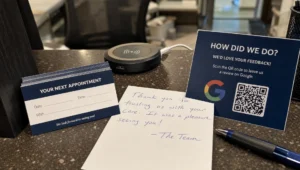
Reviews help prospective customers evaluate whether your team communicates clearly, arrives as agreed and handles concerns professionally. Build review requests into your normal follow-up process instead of asking only when someone sounds especially happy.
Send a simple request after an appropriate service milestone, with a direct link to your Google review form. Do not offer discounts or gifts for reviews, and do not screen customers so only satisfied people receive the request. Google's Maps contribution policy prohibits incentivized reviews and selectively soliciting positive reviews.
Respond without revealing private details. A public reply should not identify an infestation, treatment history or customer address unless the customer has made the relevant information public and a response is appropriate.
If a complaint needs investigation, acknowledge it and move the discussion to a private channel.
Also check your core business listings for outdated phone numbers, incorrect website links and duplicate entries. Accurate information reduces customer confusion. There is little value in chasing hundreds of directory listings while your main phone number is wrong.
Use AI to find gaps, not invent pest expertise
AI can make website and SEO work faster when its role is specific. It can help compare a service page against recurring customer questions, group search queries by pest type or draft clearer wording from information your team provides.
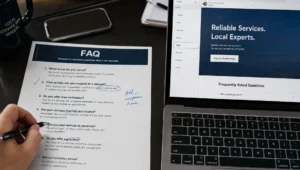
For example, give an AI tool an anonymized list of common intake questions and ask which ones your bed bug page does not answer. Then have the business owner or qualified staff verify every proposed answer before publication.
Do not use AI to invent treatment advice, customer testimonials, neighborhood experience or licensing claims. Do not upload identifiable customer records to tools without appropriate privacy safeguards.
Practical AI support should reduce administrative work and improve clarity. It should not produce hundreds of near-identical pages or replace professional judgment about pest management.
Measure booked work, not just rankings
Local SEO for pest control companies needs a measurement system that connects visibility to actual business. Rankings can help diagnose changes, but they do not tell you whether new inquiries fit your services or become appointments.
Track calls and forms by source where possible. Use Google Search Console to understand website search activity and Google Business Profile performance to review available interactions. Neither tool alone tells you how many jobs were booked.
Your office should record whether each inquiry is new, within your service area and relevant to your work. Exclude spam, vendor calls and duplicate contacts when reviewing results.
A simple lead log can include the source, pest concern, ZIP code, qualification status, booking outcome and reason a job was not booked. Follow applicable consent requirements if you use call recording.
Illustrative example: Twenty inquiries with only five service-area matches may be less useful than twelve inquiries that produce eight suitable appointments. The numbers are hypothetical, but the distinction matters: lead quality is more valuable than raw volume.
When qualified callers do not book, investigate the reason. Missed calls, scheduling delays or unclear expectations may need attention before you invest in more traffic.
A practical 90-day implementation plan
Use the first three months to establish a baseline, fix the biggest obstacles and learn which services produce suitable inquiries. This is an implementation schedule, not a promise of rankings or revenue within 90 days.
| Period | Priority work | What to review |
|---|---|---|
| Days 1-30 | Audit the Google profile, verify contact details, test mobile inquiries and choose priority services | Existing lead quality, missed calls and booking friction |
| Days 31-60 | Improve priority service pages, add useful area information and establish consistent review requests | Whether customers understand coverage and contact you successfully |
| Days 61-90 | Review lead sources, refine weak pages and address recurring booking obstacles | Qualified inquiries, booked jobs and reasons for lost opportunities |
Avoid changing everything at once. Keep a record of what changed and when so you can assess results more sensibly.
Seasonal demand also matters. Prepare pages for services you offer before your usual busy periods, based on your own inquiry history rather than a generic national calendar. Pest activity and customer demand vary by location.
If you hire an agency, ask for clear deliverables and reporting tied to qualified leads. Keep control of your domain, website and Google Business Profile. You should understand what is being improved without being pushed into a long-term contract.
Frequently asked questions
How long does local SEO take to generate pest control leads? There is no fixed timeline. Results depend on your starting visibility, competition, location and website quality. Fixing a broken contact form can recover opportunities quickly, while stronger search visibility usually requires sustained work. Review progress monthly without treating the 90-day plan as a guarantee.
Can a pest control company rank on Google Maps without a storefront? An eligible service-area business can have a Google Business Profile without a customer-facing storefront. Follow Google's address and service-area rules. Hiding a residential address does not eliminate eligibility, but adding distant service areas does not guarantee rankings there.
Do we need a separate page for every pest and neighborhood? No. Start with the services and locations that matter most to your business. Add pages when you can provide distinct, helpful information. A smaller collection of accurate pages is more useful than a large set of interchangeable ones.
Should we replace our website before starting local SEO? Not necessarily. If the site works well on mobile and can support clear service pages, targeted improvements may be enough. A redesign makes sense when the existing structure, performance or editing limitations prevent useful changes.
Get a lead-focused plan for your pest control business
If your website attracts visits but not enough suitable calls, start by finding where the process breaks: local visibility, service information, mobile contact options or follow-up.
Sleek Web Designs helps service-based businesses improve those areas through website optimization, local SEO and AI-assisted analysis. The focus is clearer customer journeys and more qualified opportunities, not design changes for their own sake.
Ask for a practical review of your website and local presence, with priorities tied to the services and areas you want to grow. No long-term contracts, just a clear plan for what needs attention.