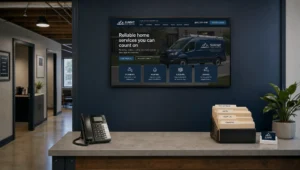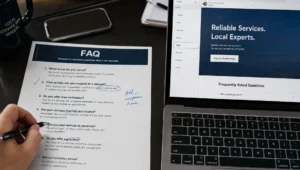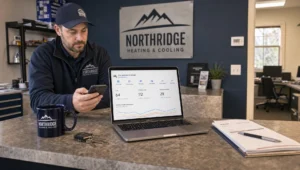
If your website isn’t generating leads, it’s not doing its job. A site can look “professional” and still fail at the only metric that matters for most small businesses: getting calls, form submissions, and booked appointments.
That’s where SEO and web design services should work as one system. SEO brings the right people to your site. Web design turns those visitors into leads. When one side is weak, the whole thing underperforms.
What Are SEO and Web Design Services?
SEO and web design services combine two disciplines that are often sold separately, even though they affect each other every day.
- Web design (done right) is not just colors and layout. It’s how your site is structured, how quickly it loads, how easy it is to understand, and how easily a visitor can contact you.
- SEO (search engine optimization) is how your business becomes visible on Google for searches that matter, especially local searches like “plumber near me” or “HVAC repair Brooklyn.”
For service businesses, the goal isn’t “more traffic.” The goal is more qualified traffic that converts into leads.
Why Design Alone Is Not Enough
A nice-looking website that doesn’t rank is invisible. A website that ranks but confuses visitors won’t convert. Either way, you lose.
Design-only websites usually fail because they focus on:
- aesthetics over clarity
- pages that talk about the business instead of solving the customer’s problem
- pretty homepages with no strong call-to-action
- no plan for local visibility (Google Maps, service area pages, reviews)
Google also needs to understand your site. Clean structure, fast load time, and clear content help both rankings and conversions.
Why Your Website Isn’t Generating Leads
Most underperforming websites have a few predictable issues. Here are the big ones we see with local service businesses.
1) You’re not actually visible (or indexed) on Google
Business owners are often surprised by this, but it’s common: pages are published, yet Google never properly indexes them, or only indexes a few pages.
If you suspect that’s happening, start here: Why isn’t Google indexing my site? It walks through the most common reasons your pages don’t show up, and what to fix.
2) The site is slow (especially on mobile)
Speed impacts everything:
- users bounce faster
- Google crawls less efficiently
- you lose leads from people who were ready to call
Google has been clear that page experience matters, and performance metrics like Core Web Vitals are part of that conversation. You can learn the baseline expectations directly from Google’s Core Web Vitals documentation.
3) The site structure is confusing
If visitors can’t quickly answer these questions, they leave:
- Do you serve my area?
- Do you do the specific service I need?
- What does it cost (or how do I get a quote)?
- Why should I trust you?
A confusing structure also hurts SEO. If important service pages are buried, duplicated, or missing entirely, Google struggles to understand what you do.
4) The content is generic or mismatched to search intent
A page titled “Services” with a few broad bullets won’t rank well and won’t convert well. Local service SEO usually needs dedicated pages for high-intent services, written in plain language, with clear next steps.
5) There’s no conversion path
Even when traffic is decent, leads stay low if:
- phone number isn’t prominent
- forms are too long
- calls-to-action are weak (“Learn more” instead of “Request an estimate”)
- there’s no trust building (reviews, badges, photos, case examples)
Here’s a quick way to diagnose what’s happening.
| Symptom | What it usually means | What to fix first |
|---|---|---|
| You get traffic but no calls | Visitors aren’t convinced or can’t act fast | Above-the-fold CTA, phone tap-to-call, service page clarity |
| You don’t rank for your main service | Google can’t confidently match your site to the query | Build a focused service page + clean site structure |
| You show up far from your location | Weak local signals | Google Business Profile, location/service-area content, consistent NAP |
| Visitors leave quickly | Slow site or unclear message | Speed, headline clarity, reduce clutter |
| Only homepage ranks | Thin content and weak internal linking | Create service pages and link them clearly |
How SEO and Web Design Work Together
The best SEO and web design services treat your website like a lead engine. That means every key SEO factor supports a conversion goal.
Website speed: rankings and lead loss prevention
Speed is not an “extra.” It’s a direct lead killer when ignored. On mobile, it’s even more obvious.
Good website optimization typically includes:
- compressing and properly sizing images
- reducing heavy scripts and bloated plugins
- improving server response and caching
- simplifying page layouts so they render faster
Mobile responsiveness: your real website is the mobile version
Most local searches happen on phones. Google also primarily uses mobile-first indexing, meaning it evaluates the mobile version of your site for indexing and ranking. Google explains the concept here: Mobile-first indexing.
If your mobile layout hides content, makes buttons hard to tap, or pushes the phone number down the page, you will lose leads.
Content structure: helping Google and humans understand the page
Good structure is not “SEO jargon.” It’s simple:
- one clear topic per page (one service, one outcome)
- headings that match what people search for
- short paragraphs and scannable sections
- proof points near the CTA (reviews, guarantees if you offer them, service area, credentials)
This is where web design and SEO meet. The page layout should support the content, not distract from it.
Local SEO signals: turning search visibility into phone calls
Local SEO is how you show up for searches in your service area, and how you compete in the map results.
Your site supports local SEO when it clearly communicates:
- who you serve (city, neighborhoods, service area)
- what you do (specific services, not vague categories)
- how to contact you fast
If your website and your Google Business Profile are out of sync, or your service areas are unclear, it’s harder to rank and harder to convert.
Key Features of a High-Converting Website
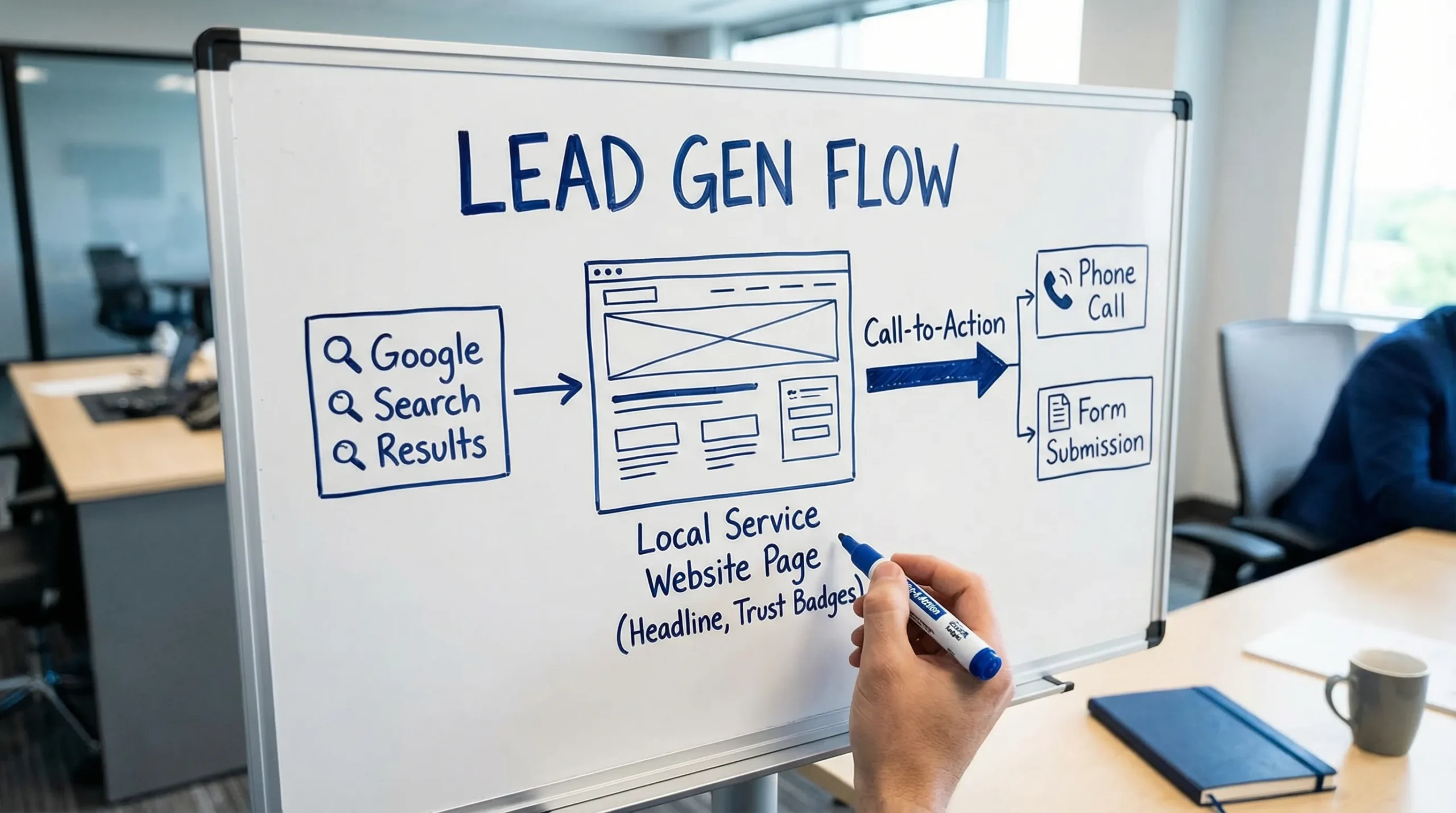
A lead-focused website is built around decision-making. People land on a page with a problem, and your site needs to quickly show that you are the right solution.
Here’s what we look for when building or improving lead generation websites.
| Feature | What it does | Why it matters for leads |
|---|---|---|
| Clear headline + service promise | Confirms the visitor is in the right place | Reduces bounce, increases calls |
| Fast load time | Keeps users from leaving | More sessions turn into inquiries |
| Dedicated service pages | Matches high-intent searches | Better rankings and better conversions |
| Strong calls-to-action | Tells users exactly what to do next | More calls and form submissions |
| Trust signals | Reduces risk and hesitation | Helps visitors choose you over competitors |
| Simple navigation | Makes key pages easy to find | Better user flow, better crawling |
| Location and service area clarity | Reinforces local relevance | Supports map visibility and local rankings |
| Tracking (calls/forms) | Measures what actually matters | Lets you improve what’s working |
A quick rule: if someone can’t figure out how to contact you within 5 seconds, the page is underbuilt.
Common Mistakes Businesses Make
Most “bad websites” aren’t truly bad, they’re just built for the wrong goal.
- Using one generic “Services” page instead of separate pages for core services
- Hiding the phone number in the footer (on mobile especially)
- Writing for themselves instead of the customer’s problem
- Ignoring indexing issues and assuming Google will “figure it out”
- Relying on stock content that looks like everyone else
- Treating local SEO like a one-time checkbox instead of an ongoing system
These mistakes usually show up as the same complaint: “We have a website, but it doesn’t bring in business.”
Local SEO and Why It Matters
For service businesses, local SEO is often the fastest path to consistent leads because it targets people who are ready to hire.
Local SEO helps you show up for:
- “near me” searches
- city and neighborhood searches
- Google Maps results (the map pack)
Strong local visibility usually requires coordination between:
- your Google Business Profile (categories, services, reviews, photos)
- consistent business info across the web (name, address, phone)
- a website that clearly supports your location and services
If you want a direct breakdown of what’s included and what moves the needle, see our local SEO services page.
How to Fix an Underperforming Website
Fixing a low-lead site is usually not about rebuilding everything. It’s about improving the parts that block rankings and conversions.
Start with visibility: confirm indexing and search coverage
Before you touch design, confirm that Google can actually find and index your important pages. If your pages aren’t indexed, nothing else matters.
Use the checklist in Why isn’t Google indexing my site? to catch common problems like thin content, crawl blocks, or structural issues.
Tighten the structure: build pages around real services
If you’re an HVAC company, “HVAC Services” is not a strategy. You want pages like:
- AC repair
- furnace repair
- HVAC installation
- maintenance plans (if you offer them)
Each page should answer what customers ask, show proof, and make contacting you easy.
Improve speed and mobile experience
This is core website optimization. You don’t need a fancy site. You need a site that loads fast, reads clearly, and makes calling effortless.
Use AI for analysis (practical, not hype)
AI can help identify issues faster, for example:
- spotting missing topics compared to competitors
- rewriting confusing sections into clearer, customer-first language
- summarizing call recordings or inquiry logs into common objections you should address on pages
If you’re looking beyond marketing and want deeper automation or custom AI workflows (quoting, intake, internal operations), an AI opportunity audit from Impulse Lab is a solid next step.
Then improve conversions: make the next step obvious
Conversion fixes are usually simple:
- make the phone number sticky on mobile
- shorten forms
- place CTAs at the top and throughout key pages
- add trust near the CTA (reviews, credentials, service area)
If you do these things and your traffic stays the same, leads often go up because fewer visitors leak out.
Conclusion: A Website Should Pay for Itself
If your website isn’t producing leads, it’s costing you money every month you leave it as-is.
The right SEO and web design services don’t chase vanity metrics. They build a simple system:
- get found locally
- load fast on mobile
- show the right message
- make it easy to call or request a quote
Frequently Asked Questions
How often should I update my website for SEO? You don’t need constant redesigns. Most businesses benefit from quarterly content and local SEO updates, plus ongoing performance checks.
Can a website rank on Google without local SEO? It can, but local SEO is usually what drives the most qualified leads for service businesses because it targets nearby, high-intent searches.
What matters more, SEO or web design? Neither wins alone. SEO gets the click, web design gets the lead. If either side is weak, your results drop.
Why does my competitor show up on Google Maps and I don’t? Usually it’s a mix of Google Business Profile optimization, stronger local signals, better reviews, and a website that clearly supports the service area.
How do I know if my site is the problem or my SEO is the problem? If you have traffic but no leads, it’s usually the website and conversion path. If you have no traffic and no rankings, it’s usually visibility, indexing, and local SEO.
Get a Lead-Focused Website Audit
If you’re tired of a website that “looks fine” but doesn’t generate business, we can help you fix what’s not working and build a clearer path to calls and inquiries.
Sleek Web Designs focuses on SEO and web design services for small businesses that want real outcomes: local visibility, better conversions, and more leads (without long-term contracts).
Request a website audit or talk through what’s holding your site back here: https://www.sleekwebdesigns.com/contact/